Wednesday, September 5, 2012

[X296.Ebook] Download The Lady, Her Lover, and Her Lord, by T. D. Jakes

Download The Lady, Her Lover, and Her Lord, by T. D. Jakes

Find out the technique of doing something from several resources. One of them is this book entitle The Lady, Her Lover, And Her Lord, By T. D. Jakes It is a very well known publication The Lady, Her Lover, And Her Lord, By T. D. Jakes that can be recommendation to review now. This suggested publication is one of the all wonderful The Lady, Her Lover, And Her Lord, By T. D. Jakes collections that are in this website. You will additionally find other title and themes from different writers to search here.

The Lady, Her Lover, and Her Lord, by T. D. Jakes

The Lady, Her Lover, and Her Lord, by T. D. Jakes


The Lady, Her Lover, and Her Lord, by T. D. Jakes

Download The Lady, Her Lover, and Her Lord, by T. D. Jakes

The Lady, Her Lover, And Her Lord, By T. D. Jakes. Let's review! We will often figure out this sentence anywhere. When still being a childrens, mommy used to purchase us to constantly check out, so did the educator. Some publications The Lady, Her Lover, And Her Lord, By T. D. Jakes are totally read in a week and also we require the responsibility to support reading The Lady, Her Lover, And Her Lord, By T. D. Jakes Just what around now? Do you still love reading? Is reading just for you who have obligation? Never! We below supply you a new e-book entitled The Lady, Her Lover, And Her Lord, By T. D. Jakes to check out.

This The Lady, Her Lover, And Her Lord, By T. D. Jakes is quite correct for you as novice reader. The users will certainly consistently start their reading habit with the preferred motif. They might rule out the writer and publisher that develop the book. This is why, this book The Lady, Her Lover, And Her Lord, By T. D. Jakes is really right to review. However, the principle that is given in this book The Lady, Her Lover, And Her Lord, By T. D. Jakes will show you many things. You could start to love also reviewing up until completion of guide The Lady, Her Lover, And Her Lord, By T. D. Jakes.

In addition, we will certainly share you guide The Lady, Her Lover, And Her Lord, By T. D. Jakes in soft data types. It will certainly not interrupt you making heavy of you bag. You require just computer system tool or device. The web link that our company offer in this site is readily available to click and after that download this The Lady, Her Lover, And Her Lord, By T. D. Jakes You know, having soft file of a book The Lady, Her Lover, And Her Lord, By T. D. Jakes to be in your tool could make relieve the readers. So by doing this, be a good reader now!

Merely link to the web to obtain this book The Lady, Her Lover, And Her Lord, By T. D. Jakes This is why we indicate you to make use of as well as use the developed technology. Reviewing book doesn't indicate to bring the published The Lady, Her Lover, And Her Lord, By T. D. Jakes Established modern technology has enabled you to check out only the soft file of the book The Lady, Her Lover, And Her Lord, By T. D. Jakes It is very same. You might not have to go as well as get traditionally in looking guide The Lady, Her Lover, And Her Lord, By T. D. Jakes You may not have sufficient time to spend, may you? This is why we offer you the very best method to get guide The Lady, Her Lover, And Her Lord, By T. D. Jakes now!

The Lady, Her Lover, and Her Lord, by T. D. Jakes

In his million-copy bestseller, Woman, Thou Art Loosed!, Bishop T. D. Jakes showed women how to heal the wounds of the past and to forge forward into their futures. Now, he has written his most urgent book yet, a progressive next step and the book millions of women have been waiting for. In this stirring call to healing and empowerment, Jakes shows us how society demands girls and women to be perfect, to be sweet, to be sexy, to be submissive, to be pristine, to be anything and everything but the one thing God wants them to be--real. He argues that females are often subjected to verbal, physical, and emotional abuse, which they then carry around in their minds and their hearts, causing them to feel like they have no place to go and no worth of their own. But Bishop Jakes has a message of Good News and hope for these women. He tells them that God has a plan for each of them, that each is holy in the arms of her Lord. His book delves deeply into the three most important relationships in a woman's life: with

herself, with her man, and with God. Jakes gives clear direction that enables and empowers women to be restored in all of their relationships without any residual side effects from the past. He redirects the expectations characteristic of failed relationships by discussing the many things women often desire from their mate that can only be fulfilled by God. This book is written for women who desire to reach their goals, maximize their God-given potential, and still have someone with whom to share them. Accessible, sensitive, practical, inspirational--the amazing T. D. Jakes has written a book that women have been praying for, with a powerful

message of hope and transformation.

  • Sales Rank: #720467 in Books
  • Brand: Putnam Adult
  • Published on: 1998-06-29
  • Released on: 1998-06-29
  • Fabric type: Trade cloth
  • Ingredients: Example Ingredients
  • Original language: English
  • Number of items: 1
  • Dimensions: 9.32" h x .90" w x 6.25" l,
  • Binding: Hardcover
  • 208 pages
Features
  • Great product!

Amazon.com Review
T.D. Jakes's insights and expressions are balm for every woman's soul. As he explains so compassionately, we have lost sight of "the lady," and it is a loss that continues to buffet women and misdirect men. Jakes eschews condemnation and exposes the lies that have cloaked women in sorrow, helping women to stand in the beauty, strength, and confidence God intended.

Bishop Jakes, church founder, pastor, and author of numerous books, including the bestselling Woman, Thou Art Loosed!, structures this book in three parts. In the first, he gently takes the hand of every woman who has been ill-used, crippled in the innermost being, and shows her what is truly beautiful about the feminine. In part two, he opens the door for communication between husband and wife, lover and friend. Part three brings alive the passion of the Lord for women, this most exquisite of His creations.

Much has been lost. Weep with Bishop Jakes over the pain to which women have succumbed. But loss is not forever. In fact, any woman reading this book will likely feel something emerge within her, something long forgotten but something that rings of truth. --Ann Weinheimer

From Publishers Weekly
A popular Christian preacher, Jakes has produced many books (e.g., Woman, Thou Art Loosed!), videos and audio tapes that are gaining ever-increasing mainstream attention. Here, he demonstrates an unusual ability to inspire, uplift, teach and comfort. An eloquent wordsmith, this African-American minister writes with an abundance of memorable metaphors and yet speaks to women's hearts in practical, often humorous terms, about "three relationships that must be balanced in order to achieve some semblance of fulfillment"?with their husbands, God and themselves. Rather than suggesting that women be selfless and restricted to hearth and home, Jakes directs them toward healthy self-love, success and creative expression, to become and be treated as "women of excellence." Jakes maintains an intimate bond with readers to the last page, through deeply personal stories: his helplessness in the face of his wife's grief over the death of her mother; the joy and hope he feels at the sound of his little girl's footsteps; the memory of his own mother, "a gentle woman with the strength to build a home and the power to create a family." Despite his book's romance-novel title and strong Christian slant, this masterful preacher offers all women sound advice and gentle, respectful encouragement. Author tour.
Copyright 1998 Reed Business Information, Inc.

From Library Journal
Jakes is a pastor who hosts a weekly television program that airs in the United States, Europe, and South Africa. He speaks a powerful message to women who have lost faith in themselves and seek salvation primarily in their relationships with men. To enjoy healthy relationships, women must first know themselves and value their own gifts and strengths, which they can do by putting God before all other relationships, according to Jake. The contemporary woman has learned to juggle so many roles that she has, of necessity, become a fierce survivor who is too busy to nurture herself. The woman who has suffered abuse or neglect can also learn to love herself with God's healing so that she can break free of the cycle that keeps her in destructive relationships. Jakes explores the vulnerability and expectations of men, pointing out ways men and women can appreciate each other's strengths by understanding their differences. Although Jakes makes a generous allowance, perhaps short of justification, for marital infidelity on the part of men, his intention is to encourage Christian women in general.
Copyright 1998 Reed Business Information, Inc.

Most helpful customer reviews

0 of 0 people found the following review helpful.
Bishop Jakes- Lady, Lover & Lord
By valencia
This book came clean and I couldn't ask for more with the price I paid. I love being able to get my books this way. I love Bishop Jakes and he teaches you how to love yourself and how important it is to know yourself. When you know yourself you know what you want out of someone else instead of making one mistake after another in a relationship. Happiness comes from within and a mate is basically a gift. Someone that should have the same goals and vision you have. Knowing God and making him the center of your life and being obedient to his word and loving him through all things no matter if a storm is blazing or it's just a hard day... when your praises go up the blessings come done. Being a lady of the Lord puts a glow around you and favor in your life!!! Love what I'm reading!!! Love ya Amazon!!

0 of 0 people found the following review helpful.
Another awesome book by the Bishop!
By Laketha Hicks
Once again Bishop Jakes gives excellent advice. I always feel as if he is talking directly to me when I read one of his works. As a woman who grew up without a father this book gave me not only insight on how to find a relationship with myself and God, but it taught me how men think and how to have a successful relationship. I have already shared this book with a friend of mine.

0 of 0 people found the following review helpful.
Changed My Life
By Ashleigh
I bought this book and the album at the same time. I was always a fan of the album but the book enhanced what every song meant. I will try to express what I got from this book without writing an entire paragraph. Soo...long story short, this book helped me understand myself more, God's intentions for our relationship, and how I should be as a wife. This book also helped me understand that I should have a relationship with God before I get my husband. I have passed this on to my friend and she became a totally different person.T.D. Jakes is such an eloquent and colorful writer that is gifted to bring realness and compassion to readers.

HIGHLY RECOMMENDED!!!

See all 157 customer reviews...

The Lady, Her Lover, and Her Lord, by T. D. Jakes PDF
The Lady, Her Lover, and Her Lord, by T. D. Jakes EPub
The Lady, Her Lover, and Her Lord, by T. D. Jakes Doc
The Lady, Her Lover, and Her Lord, by T. D. Jakes iBooks
The Lady, Her Lover, and Her Lord, by T. D. Jakes rtf
The Lady, Her Lover, and Her Lord, by T. D. Jakes Mobipocket
The Lady, Her Lover, and Her Lord, by T. D. Jakes Kindle

The Lady, Her Lover, and Her Lord, by T. D. Jakes PDF

The Lady, Her Lover, and Her Lord, by T. D. Jakes PDF

The Lady, Her Lover, and Her Lord, by T. D. Jakes PDF

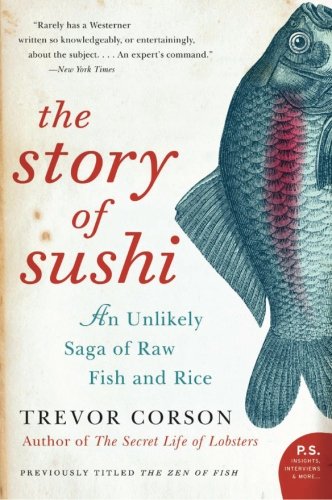
[S402.Ebook] Ebook Download The Story of Sushi: An Unlikely Saga of Raw Fish and Rice, by Trevor Corson

Ebook Download The Story of Sushi: An Unlikely Saga of Raw Fish and Rice, by Trevor Corson

If you still require a lot more books The Story Of Sushi: An Unlikely Saga Of Raw Fish And Rice, By Trevor Corson as recommendations, going to browse the title and also theme in this site is offered. You will certainly find even more lots publications The Story Of Sushi: An Unlikely Saga Of Raw Fish And Rice, By Trevor Corson in various disciplines. You could likewise as quickly as feasible to review the book that is already downloaded. Open it and also conserve The Story Of Sushi: An Unlikely Saga Of Raw Fish And Rice, By Trevor Corson in your disk or gadget. It will certainly relieve you any place you need the book soft data to check out. This The Story Of Sushi: An Unlikely Saga Of Raw Fish And Rice, By Trevor Corson soft file to check out can be recommendation for every person to boost the ability and ability.

The Story of Sushi: An Unlikely Saga of Raw Fish and Rice, by Trevor Corson

The Story of Sushi: An Unlikely Saga of Raw Fish and Rice, by Trevor Corson


The Story of Sushi: An Unlikely Saga of Raw Fish and Rice, by Trevor Corson

Ebook Download The Story of Sushi: An Unlikely Saga of Raw Fish and Rice, by Trevor Corson

Find out the method of doing something from many resources. Among them is this publication qualify The Story Of Sushi: An Unlikely Saga Of Raw Fish And Rice, By Trevor Corson It is an extremely well understood book The Story Of Sushi: An Unlikely Saga Of Raw Fish And Rice, By Trevor Corson that can be recommendation to check out currently. This advised publication is one of the all terrific The Story Of Sushi: An Unlikely Saga Of Raw Fish And Rice, By Trevor Corson compilations that are in this website. You will certainly additionally locate other title and styles from various authors to browse here.

But right here, we will certainly reveal you unbelievable thing to be able constantly review guide The Story Of Sushi: An Unlikely Saga Of Raw Fish And Rice, By Trevor Corson any place and whenever you happen as well as time. The e-book The Story Of Sushi: An Unlikely Saga Of Raw Fish And Rice, By Trevor Corson by simply could help you to realize having the e-book to read each time. It will not obligate you to constantly bring the thick book any place you go. You could just keep them on the kitchen appliance or on soft file in your computer to always read the enclosure during that time.

Yeah, hanging around to read the book The Story Of Sushi: An Unlikely Saga Of Raw Fish And Rice, By Trevor Corson by online could additionally give you good session. It will certainly relieve to communicate in whatever condition. This way could be more interesting to do as well as simpler to review. Now, to get this The Story Of Sushi: An Unlikely Saga Of Raw Fish And Rice, By Trevor Corson, you can download in the link that we offer. It will assist you to obtain simple method to download and install guide The Story Of Sushi: An Unlikely Saga Of Raw Fish And Rice, By Trevor Corson.

The e-books The Story Of Sushi: An Unlikely Saga Of Raw Fish And Rice, By Trevor Corson, from easy to complex one will be a quite helpful works that you can take to alter your life. It will not offer you unfavorable statement unless you don't get the definition. This is undoubtedly to do in reviewing an e-book to overcome the definition. Typically, this book qualified The Story Of Sushi: An Unlikely Saga Of Raw Fish And Rice, By Trevor Corson is checked out considering that you truly similar to this kind of e-book. So, you could obtain easier to recognize the perception and meaning. As soon as more to consistently keep in mind is by reviewing this publication The Story Of Sushi: An Unlikely Saga Of Raw Fish And Rice, By Trevor Corson, you can satisfy hat your inquisitiveness start by finishing this reading publication.

The Story of Sushi: An Unlikely Saga of Raw Fish and Rice, by Trevor Corson

A New York Times Editor's Choice

Everything you never knew about sushi— its surprising origins, the colorful lives of its chefs, and the bizarre behavior of the creatures that compose it

Trevor Corson takes us behind the scenes at America's first sushi-chef training academy, as eager novices strive to master the elusive art of cooking without cooking. He delves into the biology and natural history of the edible creatures of the sea, and tells the fascinating story of an Indo-Chinese meal reinvented in nineteenth-century Tokyo as a cheap fast food. He reveals the pioneers who brought sushi to the United States and explores how this unlikely meal is exploding into the American heartland just as the long-term future of sushi may be unraveling.

The Story of Sushi is at once a compelling tale of human determination and a delectable smorgasbord of surprising food science, intrepid reporting, and provocative cultural history.

  • Sales Rank: #333911 in Books
  • Published on: 2008-09-02
  • Released on: 2008-09-02
  • Original language: English
  • Number of items: 1
  • Dimensions: 8.00" h x .94" w x 5.31" l, .69 pounds
  • Binding: Paperback
  • 416 pages

From Publishers Weekly
Corson (The Secret Life of Lobsters) spent months at a "sushi school" run out of a Japanese restaurant in Hermosa Beach, Calif., observing the students as they learned how to prepare a seemingly endless variety of fish. Although the reporting focuses primarily on Kate, a young woman who struggles to overcome her lack of confidence, many of the other students get a turn in the spotlight, as do the restaurant's owner and the head instructor. This would make for a riveting enough story on its own, but Corson beautifully intersperses the drama with lessons about the history and science of each fish the class encounters, along with the rice and wasabi. He also reveals that just about everything Americans know about eating sushi is wrong, down to using chopsticks to dunk their fish in soy sauce. Foodies will find dozens of useful tips to enhance their appreciation of "the fast food of old Tokyo," especially if they entrust an experienced chef to prepare an omakase meal for them. The combination of culinary insights and personal drama makes for one of the more compelling food-themed books in recent years.
Copyright © Reed Business Information, a division of Reed Elsevier Inc. All rights reserved.

From Booklist
Americans from as recently as 20 years ago would be astounded to learn that the present generation would regularly sit down to a meal consisting principally of raw fish. Today, it's hard to find an American city that does not host at least one thriving sushi bar, and even some supermarkets feature a take-home sushi section. Following a student through the program of the decade-old California Sushi Academy, Corson uncovers the history of sushi, from its humble beginnings in Japan to its present worldwide ubiquity. Starting from Los Angeles' Little Tokyo, sushi initially attracted a celebrity following intrigued by sushi's novelty and minimalism. Stateside sushi chefs invented new varieties keyed to American proclivities and ingredients and, in a wanton affront to tradition, began to violate the inflexible male-only order of skilled sushi chefs. Americans may still drench their rice with too much soy sauce, but their hunger for more and better-quality sushi keeps on growing. Knoblauch, Mark
Copyright © American Library Association. All rights reserved

Review
“One of the best things you can enjoy without melted butter.” (Natural History magazine)

“A fascinating story, blending science, politics and history . . . the writing is vivid.” (USA Today on The Secret Life of Lobsters)

“Corson serves up a savory blend of history and science along with a satisfying course of lobster and human behavior.” (Boston Herald on The Secret Life of Lobsters)

“Trevor Corson’s reverence for all things from the sea is palpable. In his new book The Zen of Fish he takes you on a fascinating journey into the world of sushi. The story he relates is rich in detail, thoroughly engaging, simply a pleasure to get lost in.” (Eric Ripert, executive chef and co-owner of Le Bernardin, and author of “A Return to Cooking” and “Le Bernardin Cookbook: Four-Star Simplicity.”)

“The Zen of Fish is a pleasure to read, entertaining and informative, with compelling characters and fascinating history, all told in an easy and natural voice. Excellent food journalism.” (Michael Ruhlman, author of The Soul of a Chef)

“Modest, unpretentious, and personal—it offers the familiar comfort of an omakase lunch…” (Entertainment Weekly)

Corson leaves no detail unexplained, and true food nerds will appreciate his rigor....fascinating.... you’ll still be lining up to order your favorite snack, but with renewed appreciation. (Penthouse)

“Lively. . . . vivid mixture of history, science, and personal anecdotes.” (Los Angeles Times)

Illuminating new book... (Time Out New York)

Editor’s Choice; “An often amusing history.” (New York Times Book Review)

“Rarely has a Westerner written so knowledgeably, or entertainingly, about the subject. . . . an expert’s command of the subject. . . . The reader emerges not only enlightened but a much better sushi eater. (New York Times)

“Corson garnishes the tale with plenty of interesting tidbits. . . . Sushi fans may devour the information in The Zen of Fish.” (Wall Street Journal)

“The Zen of Fish” tells us everything we could possibly want to know about every aspect of sushi. (Boston Globe)

“A quirky, humanistic and mostly non-linear approach to the story of sushi. . . . poetic . . . beautiful.” (San Francisco Chronicle)

“Rarely has a Westerner written so knowledgeably, or entertainingly, about the subject. . . . The reader emerges not only enlightened but a much better sushi eater. (New York Times)

“Since sushi has become so popular in America, [Trevor Corson’s book] The Zen of Fish is now as relevant to the average American diner as other popular works of food-related journalism like Eric Schlosser’s ‘Fast Food Nation’ or Michael Pollan’s ‘The Omnivore’s Dilemma.’” (Solares Hill Key West)

“A meticulously reported account. . . . Corson proves a master at providing a non-stop banquet of tasty morsels sure to delight anyone who has taken a seat at a sushi bar.” (Seattle Post-Intelligencer)

“[The reporting] technique creates an immediate (and lasting) respect for the author’s narrative purity. . . . Corson also possesses a touch of the poetic.” (San Francisco Chronicle Book Review)

“Authoritative, often amusing, chapters on sushi history, marine biology and the physiognomy of taste. While the students hack away at mackerel, Corson serves up bite-size explanations. . . . His chapter on rice, a subject that Americans take for granted, is itself worth the price of the book.” (New York Times Book Review)

“Riveting . . . Corson beautifully intersperses the drama with lessons about the history and science of each fish . . . along with the rice and wasabi. . . . The combination of culinary insights and personal drama makes for one of the more compelling food-themed books in recent years.” (Publishers Weekly (starred review))

Most helpful customer reviews

0 of 0 people found the following review helpful.
Review of The Story of Sushi
By David J. Kosmider
The Story of Sushi: An Unlikely Saga of Raw Fish and Rice by Trevor Corson (previously titled, The Zen of Fish: The Story of Sushi, from Samurai to Supermarket), intertwines history with entertainment.

Corson focuses on the story of a young woman named Kate, described as a fun down to earth girl who was athletic and one of the guys until she broke a finger in High School. Unable to play sports anymore she became depressed and developed an eating disorder. As her depression and eating habits grew worse a friend recommended Kate try sushi. Hesitant at first Kate tried it and ended up loving it. Seemingly, more than the sushi, Kate enjoyed the attitude of the chefs who were comical and outgoing, reminding her of herself before getting sick.

As Kate continued visiting this sushi bar her overall health improved. As she pondered her future, she knew she wanted a career in which she could build friendships with customers, helping them to enjoy life. As if it was fate, Kate saw an ad for the California Sushi Academy. After a year of debating, she walked out on a leap of faith, leaving everything and everyone behind on a quest to be a sushi chef. The California Sushi Academy, California’s first Sushi Academy, consisted of an extensive 12-week training program. Corson explains how this is different from Japan where sushi apprentices spend 5 years or more just learning to make the rice before being allowed to handle anything else.

The sushi-related history and culture lessons carefully woven into Kate’s story were very interesting and informative. Corson brought his readers through sushi’s humble beginnings in Japan to its worldwide fame today. Corson did a good job painting a picture allowing his readers to “see” exactly what he was talking about. Scenes displaying Japanese culture like the auctions at the Tsukiji fish market in Tokyo, the history of Japanese knives and even the use of Japanese terms throughout the book tied the culture in nicely.

The history of the food itself was also interesting. The precision put into preparing meals requires lots of practice. The process of making certain foods like miso and soy sauce were eye opening and the natural history of the different types of fish and how to catch/farm, cook, and/or present them was informative.

Some of the other facts mentioned by Carson that were particularly interesting is that the California Roll was invented due to a Californian sushi chef running out of fatty tuna; the term mack daddy was derived from mackerels, and that the organisms eaten by flamingos are responsible for their color. Overall, the book was interesting and educational. Carson’s choice to focus on Kate, instead of others in the class, was smart because Kate being new to Sushi and Japanese culture, like many of his readers, was a nice relatable gateway to the “story of sushi”.

This review was originally written for 27Press.com.

0 of 0 people found the following review helpful.
Point me to the next sushi bar please
By TravellingCari
The author has no affiliation with the California Sushi Academy. He paid for all sushi consumed in the course of his research

This book made me crave sushi for the entire week that I was reading it. I’m a sushi fiend so this isn’t surprising, but it was a little odd when I was reading at 8 AM. This had been on my wish list for a long time.

As much as I enjoyed the info that I learned about sushi through Zoran, Kate, Marcos, Toshi and the others, I enjoyed the people. Although this was a work of documentary non-fiction, it read like a novel at times and the central figures were key. Toshi, the pioneer of American sushi; Kate the unsettled student; Zoran the teacher who is disappeared back to Australia midway through the semester; Takumi the former JPop singer. The Academy itself was a bit of a character as well.

Luckily for this sushi fiend, little beyond the author’s explanation of mold’s role in miso and sushi rice made me think twice about the food I devour. I fell in love with sushi at the tale end of my first stint in Japan but never really had a huge interest in its creation. I don’t think I’ve made sushi since a friend’s obon party in August… 2002! This book made me curious about some of the behind the scenes and probably made me a more educated consumer at the sushi bar. I learned a lot about the different fish without too much overwhelming detail

Disease isn’t the only problem. Humans like to eat yellowtail, but yellowtail also like to eat yellowtail.

Of the author’s comments on fish that’s the one I loved the most. I’m picturing carnivorous yellowtail on the sushi bar. I really enjoyed the background on the rice as its status in the US is so different to its standing in Japan.

I’m glad to see the Toshi’s California Sushi Academy is still going (despite an awful website) and to “see” Kate and company on Corson’s site.I look forward to reading more of Corson's work.

1 of 1 people found the following review helpful.
You never know...
By Burning down the house
Very well written book with interesting (real) characters (live people that is). Here I am having eaten sushi all my life and could not imagine the global infrastructure that goes into that one seemingly simple dish. And the history of sushi, now that is surprising; but logical - and no spoiler alert, read the book. Nor did I know how to properly eat sushi, having been a child of the mass produced super-market type of sushi. In reading the book, I considered being a sushi chef, but by the end after the descriptions of preparing fish, (which the author does with coolness of a well-trained surgeon) I decided there is a place in this world for a highly skilled vegan sushi chef and restaurant. But it won't have the same allure as biting into a piece of almost live meat from a creature carefully harvested and prepared by the loving hands of a real sushi chef. Read it, you'll like it! And you will appreciate sushi even more after you read the book.

See all 125 customer reviews...

The Story of Sushi: An Unlikely Saga of Raw Fish and Rice, by Trevor Corson PDF
The Story of Sushi: An Unlikely Saga of Raw Fish and Rice, by Trevor Corson EPub
The Story of Sushi: An Unlikely Saga of Raw Fish and Rice, by Trevor Corson Doc
The Story of Sushi: An Unlikely Saga of Raw Fish and Rice, by Trevor Corson iBooks
The Story of Sushi: An Unlikely Saga of Raw Fish and Rice, by Trevor Corson rtf
The Story of Sushi: An Unlikely Saga of Raw Fish and Rice, by Trevor Corson Mobipocket
The Story of Sushi: An Unlikely Saga of Raw Fish and Rice, by Trevor Corson Kindle

The Story of Sushi: An Unlikely Saga of Raw Fish and Rice, by Trevor Corson PDF

The Story of Sushi: An Unlikely Saga of Raw Fish and Rice, by Trevor Corson PDF

The Story of Sushi: An Unlikely Saga of Raw Fish and Rice, by Trevor Corson PDF

Tuesday, September 4, 2012

[V861.Ebook] Fee Download Passages: Predictable Crises of Adult Life, by Gail Sheehy

Fee Download Passages: Predictable Crises of Adult Life, by Gail Sheehy

How is to make sure that this Passages: Predictable Crises Of Adult Life, By Gail Sheehy will not presented in your shelfs? This is a soft file publication Passages: Predictable Crises Of Adult Life, By Gail Sheehy, so you can download Passages: Predictable Crises Of Adult Life, By Gail Sheehy by purchasing to obtain the soft file. It will certainly ease you to review it whenever you need. When you really feel careless to move the published publication from the home of workplace to some place, this soft data will certainly relieve you not to do that. Due to the fact that you can just conserve the data in your computer unit and also gadget. So, it allows you review it almost everywhere you have desire to review Passages: Predictable Crises Of Adult Life, By Gail Sheehy

Passages: Predictable Crises of Adult Life, by Gail Sheehy

Passages: Predictable Crises of Adult Life, by Gail Sheehy


Passages: Predictable Crises of Adult Life, by Gail Sheehy

Fee Download Passages: Predictable Crises of Adult Life, by Gail Sheehy

How a suggestion can be got? By looking at the superstars? By going to the sea as well as taking a look at the sea interweaves? Or by reviewing a book Passages: Predictable Crises Of Adult Life, By Gail Sheehy Everybody will certainly have particular unique to get the inspiration. For you that are dying of books and constantly get the inspirations from publications, it is truly wonderful to be here. We will show you hundreds compilations of the book Passages: Predictable Crises Of Adult Life, By Gail Sheehy to review. If you such as this Passages: Predictable Crises Of Adult Life, By Gail Sheehy, you can also take it as yours.

Yet below, we will certainly show you astonishing thing to be able always check out the e-book Passages: Predictable Crises Of Adult Life, By Gail Sheehy anywhere and also whenever you happen as well as time. Guide Passages: Predictable Crises Of Adult Life, By Gail Sheehy by only can aid you to recognize having guide to read every time. It won't obligate you to always bring the thick book any place you go. You can just keep them on the device or on soft file in your computer to constantly review the space during that time.

Yeah, investing time to read the publication Passages: Predictable Crises Of Adult Life, By Gail Sheehy by on the internet can likewise give you positive session. It will alleviate to maintain in touch in whatever condition. This method could be much more interesting to do and also less complicated to review. Now, to obtain this Passages: Predictable Crises Of Adult Life, By Gail Sheehy, you can download in the link that we supply. It will certainly aid you to obtain simple means to download guide Passages: Predictable Crises Of Adult Life, By Gail Sheehy.

Guides Passages: Predictable Crises Of Adult Life, By Gail Sheehy, from basic to complex one will certainly be a very helpful operates that you could take to change your life. It will not provide you adverse statement unless you don't get the meaning. This is surely to do in reviewing a publication to conquer the meaning. Frequently, this publication qualified Passages: Predictable Crises Of Adult Life, By Gail Sheehy is checked out since you actually such as this kind of book. So, you can get easier to understand the impression and significance. Once again to always keep in mind is by reading this book Passages: Predictable Crises Of Adult Life, By Gail Sheehy, you can fulfil hat your interest start by completing this reading book.

Passages: Predictable Crises of Adult Life, by Gail Sheehy

At last, this is your story. You'll recognize yourself, your friends, and your loves. You'll see how to use each life crisis as an opportunity for creative change -- to grow to your full potential. Gail Sheehy's brilliant road map of adult life shows the inevitable personality and sexual changes we go through in our 20s, 30s, 40s, and beyond. The Trying 20s -- The safety of home left behind, we begin trying on life's uniforms and possible partners in search of the perfect fit. The Catch 30s -- illusions shaken, it's time to make, break, or deepen life commitments. The Forlorn 40s -- Dangerous years when the dreams of youth demand reassessment, men and women switch characteristics, sexual panic is common, but the greatest opportunity for self-discovery awaits. The Refreshed (or Resigned) 50s -- Best of life for those who let go old roles and find a renewal of purpose.

  • Sales Rank: #89789 in Books
  • Brand: Sheehy, Gail
  • Published on: 2006-01-10
  • Released on: 2006-01-10
  • Original language: English
  • Number of items: 1
  • Dimensions: 8.00" h x 1.20" w x 5.30" l, .90 pounds
  • Binding: Paperback
  • 576 pages

From the Inside Flap
At last, this is your story. You'll recognize yourself, your friends, and your loves. You'll see how to use each life crisis as an opportunity for creative change -- to grow to your full potential. Gail Sheehy's brilliant road map of adult life shows the inevitable personality and sexual changes we go through in our 20s, 30s, 40s, and beyond. The Trying 20s -- The safety of home left behind, we begin trying on life's uniforms and possible partners in search of the perfect fit. The Catch 30s -- illusions shaken, it's time to make, break, or deepen life commitments. The Forlorn 40s -- Dangerous years when the dreams of youth demand reassessment, men and women switch characteristics, sexual panic is common, but the greatest opportunity for self-discovery awaits. The Refreshed (or Resigned) 50s -- Best of life for those who let go old roles and find a renewal of purpose.

"From the Paperback edition.

About the Author
To schedule a speaking engagement, please contact American Program Bureau at www.apbspeakers.com  

Excerpt. © Reprinted by permission. All rights reserved.
1.

MADNESS AND METHOD

without warning, in the middle of my thirties, i had a breakdown of nerve. It never occurred to me that while winging along in my happiest and most productive stage, all of a sudden simply staying afloat would require a massive exertion of will. Or of some power greater than will.

I was talking to a young boy in Northern Ireland where I was on assignment for a magazine when a bullet blew his face off. That was how fast it all changed. We were standing side by side in the sun, relaxed and triumphant after a civil rights march by the Catholics of Derry. We had been met by soldiers at the barricade; we had vomited tear gas and dragged those dented by rubber bullets back to safety. Now we were surveying the crowd from a balcony.

“How do the paratroopers fire those gas canisters so far?” I asked.

“See them jammin’ their rifle butts against the ground?” the boy was saying when the steel slug tore into his mouth and ripped up the bridge of his nose and left of his face nothing but ground bone meal.

“My God,” I said dumbly, “they’re real bullets.” I tried to think how to put his face back together again. Up to that moment in my life I thought everything could be mended.

Below the balcony, British armored cars began to plow into the crowd. Paratroopers jackknifed out of them with high-velocity rifles. They sprayed us with steel.

The boy without a face fell on top of me. An older man, walloped on the back of the neck with a rifle butt, stumbled up the stairs and collapsed upon us. More dazed bodies pressed in until we were like a human caterpillar, inching on our bellies up the steps of the exposed outdoor staircase.

“Can’t we get into somebody’s house!” I shouted. We crawled up eight floors but all the doors to the flats were bolted. Someone would have to crawl out on the balcony in open fire to bang on the nearest door. Another boy howled from below: “Jesus, I’m hit!” His voice propelled me across the balcony, trembling but still insulated by some soft-walled childhood sac that I thought provided for my own indestructibility. A moment later, a bullet passed a few feet in front of my nose. I hurled myself against the nearest door and we were all taken in.

The closets of the flat were already filled with mothers and their clinging children. For nearly an hour the bullets kept coming. From the window I saw three boys rise from behind a barricade to make a run for it. They were cut down like dummies in a shooting gallery. So was the priest who followed them, waving a white handkerchief, and the old man who bent to say a prayer over them. A wounded man we had dragged upstairs asked if anyone had seen his younger brother. “Shot dead,” was the report.

Something like this had happened to my own brother in Vietnam. But the funeral took place in the bland Connecticut country- side, and I was a few years younger. So neatly had the honor guard tricornered the victim’s flag, it looked like a souvenir sofa pillow. People had patted my hands and said, “We know how you must feel.” It made me think of the strangers who were always confiding in me that they were scheduled for surgery or “taking it easy” after a heart attack. All I had for their pain were the same words: “I know how you must feel.” I had known nothing of the sort.

After the surprise massacre, I was one among trapped thousands cringing in the paper-walled bungalows of the Catholic ghetto. All exits from the city were sealed. Waiting was the only occupation. Waiting for the British army to perform a house-to-house search.

“What will you do if the soldiers come in here firing?” I asked the old woman who was harboring me.

“Lie on me stomach!” she said.

Another woman was using the telephone to confirm the names of the dead. Once upon a time I was a Protestant of strong faith; I tried to pray. But that silly game of childhood kept running through my mind . . . if you had one wish in the whole world . . . I decided to call my love. He would say the magic words to make the danger go away.

“Hi! How are you?” His voice was absurdly breezy; he was in bed in New York.

“I’m alive.”

“Good, how’s the story coming?”

“I almost wasn’t alive. Thirteen people were murdered here today.”

“Hold on. CBS News is talking about Londonderry right now—”

“It’s called Bloody Sunday.”

“Can you speak up?”

“It’s not over. A mother of fourteen children was just run down by an armored car.”

“Now look, you don’t have to get in the front lines. You’re doing a story on Irish women, remember that. Just stick with the women and stay out of trouble. Okay, honey?”

From the moment I hung up on that nonconversation, my head went numb. My scalp shrank. Some dark switch was thrown, and a series of weights began to roll across my brain like steel balls. I had squandered my one wish to be saved. The world was negligent. Thirteen could perish, or thirteen thousand, I could perish, and tomorrow it would all be beside the point.

As I joined the people lying on their stomachs, a powerful idea took hold: No one is with me. No one can keep me safe. There is no one who won’t ever leave me alone.

I had a headache for a year.

When I flew home from Ireland, I couldn’t write the story, could not confront the fact of my own mortality. In the end, I dragged out some words and made the deadline but at an ugly price. My short temper lengthened into diatribes against the people closest to me, driving away the only sources of support who might have helped me fight my demons. I broke off with the man who had been sharing my life for four years, fired my secretary, lost my housekeeper, and found myself alone with my daughter Maura, marking time.

As spring came, I hardly knew myself. The rootlessness that had been such a joy in my early thirties, allowing me to burst the ropes of old roles, to be reckless and selfish and focused on stretching my newfound dream, to roam the world on assignments and then to stay up all night typing on caffeine and nicotine—all at once that didn’t work anymore.

Some intruder shook me by the psyche and shouted: Take stock! Half your life has been spent. What about the part of you that wants a home and talks about a second child? Before I could answer, the intruder pointed to something else I had postponed: What about the side of you that wants to contribute to the world? Words, books, demonstrations, donations—is this enough? You have been a performer, not a full participant. And now you are 35.

To be confronted for the first time with the arithmetic of life was, quite simply, terrifying.


It is unusual to find yourself in the middle of a shooting war, but many of life’s accidents can have a similar effect. You play tennis twice a week with a dynamic 38-year-old businessman. In the locker room a silent clot throttles an artery and before he can call for help, a large part of his heart muscle has been strangled. His attack touches his wife, his business associates, and all his friends of a similar age, including you.

Or a distant phone call notifies you that your father or mother has been hospitalized. You carry with you to the bedside a picture of the dynamo you last saw, clearing land or dashing off to the League of Women Voters. In the hospital you see that this dynamo has passed, all at once and incontrovertibly, into the twilight of ill health and helplessness.

As we reach midlife in the middle thirties or early forties, we become susceptible to the idea of our own perishability. If an accident that interrupts our life occurs at this time, our fears of mortality are heightened. We are not prepared for the idea that time can run out on us, or for the startling truth that if we don’t hurry to pursue our own definition of a meaningful existence, life can become a repetition of trivial maintenance duties. Nor are we anticipating a major upheaval of the roles and rules that may have comfortably defined us in the first half of life, but that must be reordered around a core of strongly felt personal values in the second.

In normal circumstances, without the blow of a life accident, these issues affiliated with midlife are revealed over a period of years. We have time to adjust. But when they are thrust on us all at once, we cannot immediately accept them. The downside of life comes too hard and fast to incorporate.

In my case, the unanticipated brush with death in Ireland brought the underlying issues of midlife forward in full force.


If i tell you about the week, six months later, if I report the observable facts—while dashing out the door to catch a plane to Florida to cover the Democratic National Convention, a healthy, divorced career mother finds one of her pet lovebirds dead and bursts into uncontrollable tears—you might say, “This woman was cracking up.” Which is precisely what I began to think.

I took the aisle seat in the tail of the plane so that when we crashed, I would be the last one to see the ground.

Flying had always been a joy to me. Plucky one that I was at 30, I had taken to parachuting out of bush planes for sport. It was different now. Whenever I went near a plane I saw a balcony in Northern Ireland. In six months the fear of airplanes had blossomed into a phobia. Every news photo of a crash drew my attention. I would study the pictures in morbid detail. The planes seemed to split at the front; I made it a rule to sit in the tail. From the safety of the entrance canopy I would call in to the pilot, “Have you had experience with instrument landings?” By now I had no shame.

I did have one comfort. The upsets of the first half of my 35th year were vaguely classifiable. I could attach the anxiety to real events. My flight phobia fell under the convenient umbrella of conversion reactions (the process by which a repressed psychic event is converted into another symptom). The sense of uprooted- ness could be explained by the fact that I’d had four different addresses in the previous two years. All my life-support systems were in flux.

By that July, however, I had put on the brakes. Things appeared to have quieted down. On the contrary, very little was going on near the surface, but no less than everything was shifting below it.

An outburst of weeping over a dead lovebird was the signal. What was wrong with me that I couldn’t even keep a lovebird alive? Somehow, I connected this loss to the unexpected departure of my housekeeper. Could I ever replace her? If I couldn’t, my own work would have to cease. How would my daughter and I survive?

For the moment Maura was safely installed with her father. Despite our divorce, or perhaps as a result of it, we had the kind of long-running love that transcends pettiness because it is built on a shared conviction. Even in the raggedness of pulling apart, we had agreed that we would know each other forever as the mother and father of a child. Together we had made this contract; it was unalterable; it superseded all others. And so we had come to enjoy the special qualities of respect and friendship that grow out of putting another’s well-being first. There was nothing out of the ordinary in Maura’s spending a week with her father, but I missed her severely. The power to discriminate between a temporary sepa- ration and an absolute ending had abruptly left me. A dark thought took its place: Whatever it was that had ruptured inside me had released a sinister force that threatened to destroy my whole jerry-built world.

On the flight to Miami, no sooner had I single-mindedly willed the 727 to clear Flushing Bay than the intruder was back, rummaging around in my psyche and sniffing at the value of my resources: You’ve done some good work, but what does it really add up to?

Too nervous to eat, what I didn’t know was that a combat between two opposing medications had begun in my abdominal zone. One had been prescribed for a lingering intestinal flu; the other, by a different doctor, after the Ireland trauma. Onto the angrily separating oils and waters of that digestive system, I threw cognac and champagne.

Once inside the hotel room, to be mindlessly mechanical seemed the best idea. Fill the closets. Clear a work space. Set up, as they say, a new “home base.” Open the suitcase. But right there, opening my suitcase: paralysis. I had thrown in on top of a white skirt a new pair of red leather sandals. They had bled into the skirt with a blazing stain. I shrieked. Suddenly I couldn’t coerce myself into making schedules, taking phone messages, meeting deadlines. Which story was I writing for whom anyway? Unknown to me, the clash of medications had begun to register. The dizziness, the gouging stomach cramps. My heart lurched into manic rhythms and began leaping around inside my chest like a frog in a jar.

The room was on the twenty-first floor. Walls of glass opened onto a balcony. The balcony hung recklessly over Biscayne Bay. Beneath it was water, nothing but liquid. There was an eclipse that night.

I was drawn out onto the balcony. With morbid fascination I monitored the eclipse. Even the planet was suspended in an un- stable condition between intervening forces of the universe. I watched the heat lightning spark off the towers of Miami Beach. The impulse was to let go, float with it. Parts of myself buried alive with an unreconciled parent, severed husband, misplaced friends and loves, even my unexplored ancestors, broke the surface and heaped on me in a mass of fractured visions, all mixed up with the bloody head of the boy in Ireland. I sat through the night on that balcony in Miami, trying to get a fix on the moon.

The next morning I called both doctors who had given me pills. I wanted a nice, neat medical explanation that would make sense of this free-floating fear. Once I had the diagnosis, I could lie down and make it all go away. They confirmed that the two drugs (one a barbiturate and the other a mood elevator) were colliding in a violent chemical reaction. I should stay in bed for a day. Keep stimulation to a minimum. Rest. Yes. But the medical diagnosis did not make it go away because “it” was much bigger than a day’s illness.

Then I tried an old technique. I would write the demon out of me. Writing had always served as a way of understanding what I was living. For what seemed like no appropriate reason, I had brought along notes for a short story. In fact, I felt almost compelled to write this particular story while I was in Miami. It was taken from an incident described to me by an intern ten years before. These were the notes:

An exceptionally alert and active woman of 60 had lived a long and comfortable married existence in the Fifth Avenue Hotel. Her husband died. She found herself, overnight, without the funds to carry on. She had no choice but to leave her home and all her friends of forty years. The only relative who could take her in was a disagreeable sister-in-law down South. Despite this abrupt and total dislocation, the widow went gracefully about closing up her New York life. At dinner the night before she was to leave, her minister and friends praised her remarkable strength of character. The next morning they came by to drive the widow to the airport; no one answered the door. They broke in and found her sprawled on the bathroom floor in her underclothes. No bump, no bruise explained it as a slip. She was simply unconscious.

Baffled, her friends drove the widow to a hospital. The intern found nothing on preliminary examination. The widow, by now conscious, had to be set to one side of the busy emergency room. Her freshly coiffed hair became disheveled. Her eyes grew vacant. She let the johnny coat fall open. Her friends sat patiently, waiting for those with knife wounds to be cauterized; but confronted with life in the raw they were wholly out of place. They were nice silk-print-dress people, as was the widow—before this. Now she began to alter even beyond the recognition of her friends. She fumbled over simple questions, confused names and dates, and eventually lost her orientation altogether. Her minister and friends retreated in polite horror. Within a matter of hours she had disintegrated into a babbling old woman.

I couldn’t write a word of the story.

Watching television was about all I could do. At midnight I snapped off the TV. For what happened next there is a simple mechanical explanation, but at the time, the steadying handle of cause and effect was beyond my reach.

I passed in front of the TV and bent over to pick up a metal belt. A hissing sound escaped from the set. With head over toes I looked back, and saw an apparition. A jellyfish of fiendish hues was spreading across the screen, eely blues and poisonous greens, stinging hairs of sulphuric yellow—stop! I bolted upright, reeling, and felt an explosion go off inside my head.

“That’s it,” I said aloud, “I’ve come unstuck.”

The phone was in the other bedroom, beyond the window wall with its balcony hung over the water. The sliding doors were open. Wind sucked at the curtains, teasing them out over the bay. Suddenly, I was terrified to walk past that window wall. If I so much as went near that balcony, I would lose my balance, go over the edge. I crouched down. Crablike, clutching at the feet of furniture for handgrips, I edged across that gaping room. I tried to tell myself this was ridiculous. But when I stood, the simple fact was that my limbs collapsed. The thought persisted: If only I can reach the right person, this nightmare will go away. I was hanging on to shreds and I knew it.

Ireland could be explained simply: Real bullets had threatened my life from the outside. It was an observable event. My fears were appropriate. Now the destructive force was inside me. I was my own event. I could not escape it. Something alien, horrible, unspeakable but undeniable, had begun to inhabit me. My own death.


Each of us stumbles upon the major issue of midlife somewhere in the decade between 35 and 45. Though this can also be an ordinary passage with no outer event to mark it, eventually we all confront the reality of our own death. And somehow, we must learn to live with it. The first time that message comes through is probably the worst.

We try to flee the task of incorporating our own shortcomings and destructiveness, as well as the world’s destructive side. Rather than accept the unacceptable spooks, we try to drive them away by resorting to the coping techniques that have worked before.

The first is: turn on the lights. It always made the spooks go away in childhood. As adults we translate that technique into acquiring the correct knowledge. I looked first for a clear and simple medical explanation. Only part of my symptoms were ascribable to a chemical reaction to pills; I wanted that part to be the whole explanation. It wasn’t, and turning on the lights did not take the fear away.

A second technique is to call for help. When the child is afraid he calls a Strong One to interrupt the fear and make it vanish. Then he learns the technique for himself and is able to dismantle most irrational fears. Now what happens when we come to a fear that we cannot make vanish? No one has any magic against mortality. Everyone to whom we assign that task disappoints us. My call from Ireland, of course, failed.

A third method is to ignore it by keeping busy, pretending to carry on as if nothing has changed. But the same sensations are likely to persist. I couldn’t shake the questions about where I had been and where I was going, the overall feeling of losing balance. Balance is, speaking symbolically, standing on one’s own two feet. It is the status we first achieved as children breaking in our first hard soles. Even then, by virtue of learning how to take over some of the responsibility for ourselves, we felt both winners of grand new powers and losers of our protective supports. The major task of midlife is to give up all our imagined safety providers and stand naked in the world, as the rehearsal for assuming full authority over ourselves.

The fear is: What if I can’t stand on my own two feet?

The thought of death is too terrifying to confront head on, and so it keeps coming back in disguise: as pitching airplanes, swaying floors, precarious balconies, lovers’ quarrels, mysterious backfires in our physical equipment. We elude it by pretending to function as before. Some people press down harder on the career accelerator. Others play more tennis, run more laps, give bigger parties, find younger flesh to take to bed. I flew on to a political convention. But sooner or later a rockslide of thoughts, distorted and sharp-edged visions of aging, aloneness, and death, can gather enough force to temporarily crush our most basic assumption: My system is in fine working order and I can stand up whenever I wish. What happens when we cannot rely even on that? The struggle begins in earnest between a front-door mind that tries to brush them away and the piercing questions of the second half of life that keep tumbling down the backside of the mind, saying: You can’t forget about us!

Work is another way of keeping busy. In my case, fear made work impossible. The story that I was trying to write in Miami concerned a woman coming to the end of her rope. One who is left alone, falls unconscious, loses her faculties, and is transformed with a Dorian Gray stroke into an old lady.

The story was the inner psychic drama that I was living. My structure, too, was disintegrating all at once. I was leaving that whole world of the girl I wanted to think I was—the loving, generous, fearless, ambitious “good” girl who lived in a silk-print, sensible, humane world—and now I was seeing the dark side. The unfathomable fears were: I’ll lose my stable pattern and all the skills that work for me . . . I’ll wake up in some alien place . . . I will lose all my friends and connections . . . Suddenly, I won’t be me anymore . . . I’ll be transformed into some other, execrable form . . . old woman.


Well, i wasn’t. I survived. I grew up a little, and all that seems a hundred years ago. An awesome life accident had coincided with a critical turning point in my own life cycle. It was this experience that made me eager to find out everything I could about this thing called midlife crisis.

But no sooner did I begin seeking out the people who are the case histories in this book than I found myself drawn into a subject infinitely more complicated. There were crises all along, or rather, points of turning. The more I interviewed the more I noticed similarities in the turning points people described. Not only were there other critical points than at midlife, but they came up with a relentless regularity at the same ages.

People were baffled by these periods of disruption. They tried to connect them to outer events of their lives, but there was no consistency to the events they blamed, whereas there was a striking consistency to the inner turmoil they described. At specific points along the life cycle they would feel stirrings, sometimes momentous changes of perspective, often mysterious dissatisfactions with the course they had been pursuing with enthusiasm only a few years before.

I began to wonder if there were, in fact, turning points in the lives of adults that were predictable?

Is There Life After Youth?

It occurred to me that what Gesell and Spock did for children hadn’t been done for us adults.

Studies of child development have plotted every nuance of growth and given us comforting labels such as the Terrible Twos and the Noisy Nines. Adolescence has been so carefully deciphered, most of the fun of being impossible has been taken out of it. But after meticulously documenting our periods of personality development up to the age of 18 or 20—nothing. Beyond the age of 21, apart from medical people who are interested only in our gradual physical decay, we are left to fend for ourselves on the way downstream to senescence, at which point we are picked up again by gerontologists.

It’s far easier to study adolescents and aging people. Both groups are in institutions (schools or rest homes) where they make captive subjects. The rest of us are out there in the mainstream of a spinning and distracted society, trying to make some sense of our one and only voyage through its ambiguities.

Where were the guidelines on how to get through the Trying Twenties, the Forlorn Forties? Could folklore be trusted, for instance, when it tells us that every seven years we grown-ups get an itch?

We have been taught that children develop, by ages and stages, that the steps are pretty much the same for everybody, and that to grow out of the limited behavior of childhood we must climb them all. Children alternate between stages of equilibrium and disequilibrium. As parents, we are educated not to blame these extremes of behavior on a teacher, the other parent, or the children themselves, but to accept them as essential steps to growth.

Yet having applied this understanding of personality growth chapter and verse to guide our offspring from crib to college, we leave them at the door to adulthood like windup dolls: technologically proficient, geared for problem solving, trained to maneuver around obstacles. But equipped with any real understanding of the inner works, of the notion that even as grown-ups we may alternate between being in step and being off balance both with ourselves and the forces in our world—no, that’s not part of the cultural programming.

The years between 18 and 50 are the center of life, the unfolding of maximum opportunity and capacity. But without any guide to the inner changes on the way to full adulthood, we are swimming blind. When we don’t “fit in,” we are likely to think of our behavior as evidence of our inadequacies, rather than as a valid stage unfolding in a sequence of growth, something we all accept when applied to childhood. It is even easier to blame our periods of disequilibrium on the closest person or institution, our mother, our marriage, our work, the nuclear family, the system. We seize on the cop-out.

Until recently, whenever psychiatrists and social scientists did address themselves to adult life, it was only in terms of its problems, rarely from the perspective of continuing and predictable changes. The concepts handed down by Freud were based on the assumption that the personality is more or less determined by the time a child reaches the age of five.

What do these concepts have to offer the 40-year-old man who has reached his professional goal but feels depressed and unappreciated? He blames his job or his wife or his physical surroundings for imprisoning him in this rut. Fantasies of breaking out begin to dominate his thoughts. An interesting woman he has met, another field of work, an Elysian part of the country—any or all of these become magnets for his wishes of deliverance. But once these objects of desire become accessible, the picture often begins to reverse itself. The new situation appears to be the dangerous trap from which he longs to take flight by returning to his old home base and the wife and children whose loss suddenly makes them dear.

No wonder many wives stand aghast, spectators at this game of chance, able only to label it “my husband’s craziness.” No one ever told them that a sense of stagnation, disequilibrium, and depression is predictable as we enter the passage to midlife.

And what do traditional Freudian concepts have to say to the 35-year-old mother who, having tried to provide the ideal Petri dish for the growth of her children’s egos, suddenly feels her own to be about as solid as a boiled turnip? No matter what your age, you might identify with the apocryphal experience of a 35-year-old woman named Doris.

For the fifteen years of her marriage, Doris’s husband had never pressed her to entertain or to go with him to business affairs. One night he came home with the news that he was being considered by his firm’s major competitor for its top spot.

“And listen to this,” he said. “The retiring president has invited both of us to a dinner party next week. This will clinch it.”

“Omigod,” Doris said. “I haven’t had dinner with anybody above waist height for years. What’ll I talk about?”

“C’mon, honey,” her husband said, “all you have to do is glance through last week’s newspapers.”

Dutifully, Doris read four weeks’ back issues of the news of The Week in Review, and every night before she went to sleep, she memorized the name of another Arab leader.

The party was studded with the worldly and the wise. Her dinner partner was the company head. “Oh no,” she thought, but valiantly she plunged in and began expounding on the problem of air rights when cities start using solar energy. The man’s mouth was full, so she went on to explain Hubert Humphrey’s philosophy of democracy for the Third World. Taking a breath, she noticed to her delight that she had the full and transfixed attention of all the dinner guests at her end of the table. Encouraged, she ad libbed for five more minutes. The president was obviously impressed. In fact, he couldn’t take his eyes off her.

She looked down modestly. And discovered that all the while, out of habit, she had been cutting up the man’s steak.

The pith of this story, and the man’s predicament before it, concerns something we might have sensed but were never told to expect: that life after adolescence is not one long plateau. Changes are not only possible and predictable, but to deny them is to be an accomplice to one’s own unnecessary vegetation.

A new concept of adulthood, one that embraces the total life cycle, is questioning the old assumptions. If one sees the personality not as an apparatus that is essentially constructed by the time childhood is over, but as always in its essence developing, then life at 25 or 30 or at the gateway to middle age will stimulate its own intrigue, surprise, and exhilaration of discovery.1


The mystics and the poets always get there first. Shakespeare tried to tell us that man lives through seven stages in the “All the world’s a stage” speech in As You Like It. And many centuries before Shakespeare, the Hindu scriptures of India described four distinct life stages, each calling for its own fresh response: student; householder; retirement, when the individual was encouraged to become a pilgrim and begin his true education as an adult; and the final state of sannyasin, defined as “one who neither hates nor loves anything.”2

The first psychologist to view the life cycle by stages was Else Frenkel-Brunswik. Drawing on the intellectual opulence that was Vienna in the 1930s, she later brought her insights to theorists at the University of California at Berkeley. Hers was a pioneering effort in the linking of psychology with sociology. Working from the biographies of 400 persons—a dazzling cast that included Queen Victoria, John D. Rockefeller, Casanova, Jenny Lind, Tolstoy, Goethe, and Goethe’s mother—she examined their histories in terms of external events as well as subjective experiences. Frenkel- Brunswik’s conclusion was that every person passes through five sharply demarcated phases.3 The phases she described foreshadowed the eight stages (three of them for adults) in the life cycle later outlined by Erik Erikson.4

It was Erikson who began to make the life cycle a clear and popular concept with the publication of his first book, Childhood and Society, in 1950. We know only obliquely of Erikson’s own suffering in the lifelong effort to build a personal identity. The son of a Jewish mother and a father who abandoned the family before his birth, he repudiated the name of his German Jewish stepfather. He created his own name—Erik, son of Erik—thereby casting himself as his own father. After leaving Europe in 1939, a victim of Nazism, he became an American citizen in California and at Berkeley began to concern himself with the universal crises of development.5

Erikson constructed a chart showing life unfolding in observable sequence. Each stage was marked by a crisis. “Crisis” connoted not a catastrophe, but a turning point, a crucial period of increased vulnerability and heightened potential. He was careful to point out that he did not consider all development a series of crises. He claimed rather that psychosocial development proceeds by critical steps—“critical” being a characteristic of moments of decision between progress and regression. At such points either achievements are won or failures occur, leaving the future to some degree better or worse but in any case, restructured.

Most helpful customer reviews

10 of 10 people found the following review helpful.
Book from my past
By mamaincharge
I had read Passages 20 years ago, then donated it to a library. From then on, I regretted not having it when I talked with friends about the transitions in adult life. The last time I had that regret, I happily remembered that I could order used books easily on Amazon, so I got two copies. One is to lend and one is to keep.
What is so special about this book is that it picks up where other books end. There are thousands of books about infants, young children and teens. We fully understand that growth is a process and that, while each person is unique, there are commonalities in development. However, once we are adults, we seem to think we are static.
Passages describes the normal growth throughout life. It is comforting to see, for example, that most people have to seriously reassess their goals in their 40's.
This book is especially encouraging for parents of adult chidren. It affirms that we are changing our own priorities and it helps us to see how our needs and the ever changing needs of our offspring can complement one another. Maybe most importantly, we are reminded that their attention to their own careers and children right when we crave more intimacy with them is normal and healthy.

3 of 3 people found the following review helpful.
A Must Read
By Mini Martin
I LOVED this book! Read it too late to change things in my life, as I am a senior citizen, but as I read it I felt she had been a silent observer in things that I did. A must read for girls and young women before they attach themselves to a male and fail to learn who THEY are supposed to be and how to proceed with the only life they are given. Give this book to a 7th or 8th grader and older so they can reach their full potential. Incredible read.

0 of 0 people found the following review helpful.
The 'generic life cycles' was understandable and useful.
By Annette Morris
I had gotten this book when it first came out in the 70's. Lost a lot of books in the 80's and now I am getting some back. This one and her Passages for women "the Silent Passage" were very helpful in understanding many things in my life. The 'generic life cycles' was understandable and useful.

See all 64 customer reviews...

Passages: Predictable Crises of Adult Life, by Gail Sheehy PDF
Passages: Predictable Crises of Adult Life, by Gail Sheehy EPub
Passages: Predictable Crises of Adult Life, by Gail Sheehy Doc
Passages: Predictable Crises of Adult Life, by Gail Sheehy iBooks
Passages: Predictable Crises of Adult Life, by Gail Sheehy rtf
Passages: Predictable Crises of Adult Life, by Gail Sheehy Mobipocket
Passages: Predictable Crises of Adult Life, by Gail Sheehy Kindle

Passages: Predictable Crises of Adult Life, by Gail Sheehy PDF

Passages: Predictable Crises of Adult Life, by Gail Sheehy PDF

Passages: Predictable Crises of Adult Life, by Gail Sheehy PDF

Friday, August 24, 2012

[N738.Ebook] Get Free Ebook The Book of Gad The Seer: Hungarian Translation (Hungarian Edition), by Ti Burtzloff

Get Free Ebook The Book of Gad The Seer: Hungarian Translation (Hungarian Edition), by Ti Burtzloff

Exceptional The Book Of Gad The Seer: Hungarian Translation (Hungarian Edition), By Ti Burtzloff book is consistently being the most effective buddy for spending little time in your workplace, evening time, bus, and also anywhere. It will certainly be an excellent way to simply look, open, as well as review the book The Book Of Gad The Seer: Hungarian Translation (Hungarian Edition), By Ti Burtzloff while because time. As understood, encounter and also skill do not always had the much cash to obtain them. Reading this book with the title The Book Of Gad The Seer: Hungarian Translation (Hungarian Edition), By Ti Burtzloff will let you know more points.

The Book of Gad The Seer: Hungarian Translation (Hungarian Edition), by Ti Burtzloff

The Book of Gad The Seer: Hungarian Translation (Hungarian Edition), by Ti Burtzloff


The Book of Gad The Seer: Hungarian Translation (Hungarian Edition), by Ti Burtzloff

Get Free Ebook The Book of Gad The Seer: Hungarian Translation (Hungarian Edition), by Ti Burtzloff

Tips in deciding on the best book The Book Of Gad The Seer: Hungarian Translation (Hungarian Edition), By Ti Burtzloff to read this day can be gotten by reading this resource. You can locate the most effective book The Book Of Gad The Seer: Hungarian Translation (Hungarian Edition), By Ti Burtzloff that is offered in this globe. Not only had actually the books published from this country, yet also the other countries. As well as currently, we mean you to review The Book Of Gad The Seer: Hungarian Translation (Hungarian Edition), By Ti Burtzloff as one of the reading materials. This is only one of the very best books to collect in this site. Look at the web page as well as browse guides The Book Of Gad The Seer: Hungarian Translation (Hungarian Edition), By Ti Burtzloff You could locate great deals of titles of guides supplied.

However right here, we will certainly show you extraordinary thing to be able constantly review the book The Book Of Gad The Seer: Hungarian Translation (Hungarian Edition), By Ti Burtzloff wherever and whenever you take location and also time. Guide The Book Of Gad The Seer: Hungarian Translation (Hungarian Edition), By Ti Burtzloff by only can aid you to recognize having the e-book to check out whenever. It won't obligate you to always bring the thick e-book wherever you go. You could just keep them on the gizmo or on soft documents in your computer system to always review the room during that time.

Yeah, hanging out to check out the book The Book Of Gad The Seer: Hungarian Translation (Hungarian Edition), By Ti Burtzloff by on-line can likewise give you favorable session. It will certainly reduce to correspond in whatever condition. Through this could be more intriguing to do and much easier to check out. Now, to get this The Book Of Gad The Seer: Hungarian Translation (Hungarian Edition), By Ti Burtzloff, you could download in the link that we provide. It will certainly assist you to obtain very easy method to download and install the book The Book Of Gad The Seer: Hungarian Translation (Hungarian Edition), By Ti Burtzloff.

The books The Book Of Gad The Seer: Hungarian Translation (Hungarian Edition), By Ti Burtzloff, from basic to complex one will be an extremely useful works that you can take to transform your life. It will not provide you negative statement unless you don't obtain the definition. This is definitely to do in reading a book to get over the definition. Frequently, this e-book entitled The Book Of Gad The Seer: Hungarian Translation (Hungarian Edition), By Ti Burtzloff is checked out since you really similar to this sort of publication. So, you can obtain much easier to recognize the impression as well as definition. Again to always remember is by reading this publication The Book Of Gad The Seer: Hungarian Translation (Hungarian Edition), By Ti Burtzloff, you can fulfil hat your curiosity beginning by finishing this reading book.

The Book of Gad The Seer: Hungarian Translation (Hungarian Edition), by Ti Burtzloff

This is The Hungarian Translation of The Book of Gad The Seer as Referred to in 1 Chronicles 29:29 which is given as follows: Now the acts of David the King first and last, behold, they are written in the book of Samuel the Seer, and in the book of Nathan the Prophet, and in the book of Gad the Seer, This book also includes the English version.

  • Published on: 2015-04-25
  • Original language: Hungarian
  • Number of items: 1
  • Dimensions: 11.00" h x .10" w x 8.50" l, .29 pounds
  • Binding: Paperback
  • 44 pages

About the Author
Regarding the personality of the author, we are not permitted to comment in great length. It matters but little who he is. His inspired writings, The Book of Nathan The Prophet and The Book of Gad The Seer are able to stand on their own merit and speak for themselves. Suffice it to say that he can be reached at nathanicorder@gmail.com and he welcomes all questions, comments, or concerns pertaining to The Book of Nathan The Prophet and/or The Book of Gad The Seer.

Most helpful customer reviews

See all customer reviews...

The Book of Gad The Seer: Hungarian Translation (Hungarian Edition), by Ti Burtzloff PDF
The Book of Gad The Seer: Hungarian Translation (Hungarian Edition), by Ti Burtzloff EPub
The Book of Gad The Seer: Hungarian Translation (Hungarian Edition), by Ti Burtzloff Doc
The Book of Gad The Seer: Hungarian Translation (Hungarian Edition), by Ti Burtzloff iBooks
The Book of Gad The Seer: Hungarian Translation (Hungarian Edition), by Ti Burtzloff rtf
The Book of Gad The Seer: Hungarian Translation (Hungarian Edition), by Ti Burtzloff Mobipocket
The Book of Gad The Seer: Hungarian Translation (Hungarian Edition), by Ti Burtzloff Kindle

The Book of Gad The Seer: Hungarian Translation (Hungarian Edition), by Ti Burtzloff PDF

The Book of Gad The Seer: Hungarian Translation (Hungarian Edition), by Ti Burtzloff PDF

The Book of Gad The Seer: Hungarian Translation (Hungarian Edition), by Ti Burtzloff PDF

Thursday, August 23, 2012

[T408.Ebook] PDF Download Computer System Architecture (3rd Edition), by M. Morris R. Mano

PDF Download Computer System Architecture (3rd Edition), by M. Morris R. Mano

As known, book Computer System Architecture (3rd Edition), By M. Morris R. Mano is popular as the window to open the world, the life, as well as brand-new thing. This is exactly what individuals currently require so much. Also there are lots of people who do not like reading; it can be an option as referral. When you actually require the means to develop the next motivations, book Computer System Architecture (3rd Edition), By M. Morris R. Mano will really guide you to the method. Moreover this Computer System Architecture (3rd Edition), By M. Morris R. Mano, you will have no remorse to obtain it.

Computer System Architecture (3rd Edition), by M. Morris R. Mano

Computer System Architecture (3rd Edition), by M. Morris R. Mano


Computer System Architecture (3rd Edition), by M. Morris R. Mano

PDF Download Computer System Architecture (3rd Edition), by M. Morris R. Mano

Why ought to await some days to obtain or receive guide Computer System Architecture (3rd Edition), By M. Morris R. Mano that you purchase? Why must you take it if you can obtain Computer System Architecture (3rd Edition), By M. Morris R. Mano the quicker one? You can find the very same book that you purchase right here. This is it guide Computer System Architecture (3rd Edition), By M. Morris R. Mano that you could obtain directly after acquiring. This Computer System Architecture (3rd Edition), By M. Morris R. Mano is popular book around the world, certainly many people will attempt to have it. Why do not you come to be the initial? Still perplexed with the way?

This Computer System Architecture (3rd Edition), By M. Morris R. Mano is extremely appropriate for you as beginner viewers. The visitors will constantly start their reading habit with the preferred motif. They could not consider the author as well as publisher that produce guide. This is why, this book Computer System Architecture (3rd Edition), By M. Morris R. Mano is actually appropriate to read. Nonetheless, the concept that is given up this book Computer System Architecture (3rd Edition), By M. Morris R. Mano will certainly reveal you many things. You can start to enjoy likewise reading until completion of guide Computer System Architecture (3rd Edition), By M. Morris R. Mano.

On top of that, we will certainly share you the book Computer System Architecture (3rd Edition), By M. Morris R. Mano in soft data types. It will not disturb you making heavy of you bag. You need only computer device or gizmo. The link that we offer in this site is readily available to click and then download this Computer System Architecture (3rd Edition), By M. Morris R. Mano You know, having soft documents of a book Computer System Architecture (3rd Edition), By M. Morris R. Mano to be in your gadget can make alleviate the users. So this way, be a great visitor now!

Merely hook up to the web to obtain this book Computer System Architecture (3rd Edition), By M. Morris R. Mano This is why we mean you to use and also utilize the industrialized innovation. Reading book does not indicate to bring the published Computer System Architecture (3rd Edition), By M. Morris R. Mano Created innovation has enabled you to review only the soft documents of guide Computer System Architecture (3rd Edition), By M. Morris R. Mano It is very same. You might not have to go and also get traditionally in looking the book Computer System Architecture (3rd Edition), By M. Morris R. Mano You may not have sufficient time to spend, may you? This is why we provide you the most effective means to get the book Computer System Architecture (3rd Edition), By M. Morris R. Mano currently!

Computer System Architecture (3rd Edition), by M. Morris R. Mano

Dealing with computer architecture as well as computer organization and design, this fully updated book provides the basic knowledge necessary to understand the hardware operation of digital computers. Written to aid electrical engineers, computer engineers, and computer scientists, the volume includes: KEY FEATURES: the computer architecture, organization, and design associated with computer hardware • the various digital components used in the organization and design of digital computers • detailed steps that a designer must go through in order to design an elementary basic computer • the organization and architecture of the central processing unit • the organization and architecture of input-output and memory • the concept of multiprocessing • two new chapters on pipeline and vector processing • two sections devoted completely to the reduced instruction set computer (RISC) • and sample worked-out problems to clarify topics.

  • Sales Rank: #395902 in Books
  • Brand: Prentice Hall
  • Published on: 1992-10-29
  • Ingredients: Example Ingredients
  • Original language: English
  • Number of items: 1
  • Dimensions: 9.10" h x 1.40" w x 7.40" l, 2.13 pounds
  • Binding: Paperback
  • 524 pages

From the Publisher
Focused primarily on hardware design and organization -- and the impact of software on the architecture -- this volume first covers the basic organization, design, and programming of a simple digital computer, then explores the separate functional units in detail.

From the Back Cover

Focused primarily on hardware design and organization — and the impact of software on the architecture — this volume first covers the basic organization, design, and programming of a simple digital computer, then explores the separate functional units in detail.

FEATURES:

  • develops an elementary computer to demonstrate by example the organization and design of digital computers.
  • uses a simple register transfer language to specify various computer operations.

Most helpful customer reviews

3 of 3 people found the following review helpful.
Very frustrating...
By wunjo
Like almost all other reviewers of this book I must say this is an awful book to learn from. If you are taking a class from a teacher who is teaching from this book that will tell you a lot about the professor. Being that this book is from the early 90's, it is filled with very generic information that you're not sure is even still used in today's technology. The book has one generic(if any) example throughout the text pertaining to the homework questions at the end of the chapter. Everyday in class I was told my homework was wrong for following the example in the book because it is only a "suggestion" of how one would design the system. This is fine if the book is intriguing and leads you in the right direction, however this book does the opposite. It should be out of print and not used for classes taught in the 21st century.

2 of 2 people found the following review helpful.
Great Amazon Customer Service
By Joe Smith
This review concerns Amazon.com's customer service, not specifically this book. I rated it 3-stars only because that's the current average. I haven't actually started the course for which I need this book, so I can't comment on it's content.

I received this book in a slightly damaged condition, i.e., a small tear in the front cover. This would normally not be a big deal, but I expect a new book for which I paid $110 for to be in mint condition. Since I didn't have time to exchange it before my class started, I instead asked Amazon.com for a small credit, without specifying an amount. They replied to my email in just a few hours, offering a 20% refund to my credit card. I thought this was more than fair and a great example of taking care of a customer.

UPDATE 5/27/2010: I recently finished my college class with this book and I didn't like it. The text is very dated (just look at the copyright date). There were one or two parts I couldn't reconcile with other material provided by my college and my professor's answer to the problem was that Mano didn't even know about the issue when he wrote the book because it wasn't invented yet. Hmmmm, is it just me or should a computer text book be newer than 18 years old?

In all fairness, this text book was used for an introductory course, so many of the concepts it teaches are germane to a basic understanding of the topic. However, for the price, I expect updated material. If you need the book for college, then you don't have a choice, but if you want the book for your personal interest, I recommend finding a newer text.

5 of 5 people found the following review helpful.
Would give it 2 1/2 stars if I could
By Five Points Higher
The book isn't really all that bad, the problem is that it can be confusing to some readers. Instead of giving a list of problems, I am going to go into some detail about one specific thing wrong with the book, which could be a BIG problem for some readers. It is this:

It seems like once or twice every couple paragraphs, Mano will give a one-sentence explanation or description of something; and then a sentence or two later in the same paragraph, he will attempt to make the same point again but by rewording and rearranging the original sentence. I found this so incredibly distracting that I could not finish the book. I think Mano is doing this, i.e. repeating himself, to embed a concept into the student's mind. Not a bad idea, but it is poorly implemented by Mano...

what was so distracting about this, is that even if the reader feels he understands the concept the first time it is presented, when he then reads the reworded version, the tendency is to say "hey, wait a minute, is this the same thing he said before, or do the two statements conflict? or is it new information? Or did I not understand the first time??" So then I, at least, would go back and reread the first statement, then again compare it to the second, until I was able to answer these questions for myself. So it really slowed down my reading. I don't know, maybe it's just the way I read.

I should mention that I was mainly trying to learn from the book by self-study, i.e. no professor, although I did take a microprocessors course about 15 years ago.

Well, I guess I was verbose :-> but I wanted to inform so that anyone who thinks that they also will be distracted by this, buy a different book (like Rafiquzzaman)

See all 32 customer reviews...

Computer System Architecture (3rd Edition), by M. Morris R. Mano PDF
Computer System Architecture (3rd Edition), by M. Morris R. Mano EPub
Computer System Architecture (3rd Edition), by M. Morris R. Mano Doc
Computer System Architecture (3rd Edition), by M. Morris R. Mano iBooks
Computer System Architecture (3rd Edition), by M. Morris R. Mano rtf
Computer System Architecture (3rd Edition), by M. Morris R. Mano Mobipocket
Computer System Architecture (3rd Edition), by M. Morris R. Mano Kindle

Computer System Architecture (3rd Edition), by M. Morris R. Mano PDF

Computer System Architecture (3rd Edition), by M. Morris R. Mano PDF

Computer System Architecture (3rd Edition), by M. Morris R. Mano PDF

Saturday, August 18, 2012

[B481.Ebook] Download Ebook The Time In Between: A Memoir of Hunger and Hope, by Nancy Tucker

Download Ebook The Time In Between: A Memoir of Hunger and Hope, by Nancy Tucker

New updated! The The Time In Between: A Memoir Of Hunger And Hope, By Nancy Tucker from the best author and also author is currently offered right here. This is guide The Time In Between: A Memoir Of Hunger And Hope, By Nancy Tucker that will certainly make your day reading ends up being finished. When you are looking for the printed book The Time In Between: A Memoir Of Hunger And Hope, By Nancy Tucker of this title in the book store, you could not locate it. The issues can be the limited versions The Time In Between: A Memoir Of Hunger And Hope, By Nancy Tucker that are given up guide shop.

The Time In Between: A Memoir of Hunger and Hope, by Nancy Tucker

The Time In Between: A Memoir of Hunger and Hope, by Nancy Tucker


The Time In Between: A Memoir of Hunger and Hope, by Nancy Tucker

Download Ebook The Time In Between: A Memoir of Hunger and Hope, by Nancy Tucker

Reviewing a publication The Time In Between: A Memoir Of Hunger And Hope, By Nancy Tucker is kind of simple task to do each time you desire. Also reading every single time you really want, this task will not interrupt your other activities; many individuals generally read guides The Time In Between: A Memoir Of Hunger And Hope, By Nancy Tucker when they are having the extra time. Just what concerning you? What do you do when having the extra time? Don't you spend for ineffective things? This is why you should obtain the book The Time In Between: A Memoir Of Hunger And Hope, By Nancy Tucker as well as aim to have reading habit. Reviewing this book The Time In Between: A Memoir Of Hunger And Hope, By Nancy Tucker will not make you useless. It will certainly offer much more advantages.

As we explained in the past, the modern technology assists us to consistently realize that life will certainly be consistently less complicated. Reviewing e-book The Time In Between: A Memoir Of Hunger And Hope, By Nancy Tucker habit is likewise among the advantages to obtain today. Why? Innovation could be utilized to provide guide The Time In Between: A Memoir Of Hunger And Hope, By Nancy Tucker in only soft file system that can be opened each time you really want and also all over you need without bringing this The Time In Between: A Memoir Of Hunger And Hope, By Nancy Tucker prints in your hand.

Those are some of the perks to take when obtaining this The Time In Between: A Memoir Of Hunger And Hope, By Nancy Tucker by on-line. But, just how is the method to get the soft data? It's very right for you to see this web page due to the fact that you could obtain the link web page to download the e-book The Time In Between: A Memoir Of Hunger And Hope, By Nancy Tucker Merely click the link given in this article as well as goes downloading. It will not take much time to obtain this book The Time In Between: A Memoir Of Hunger And Hope, By Nancy Tucker, like when you have to go for book shop.

This is likewise among the factors by obtaining the soft documents of this The Time In Between: A Memoir Of Hunger And Hope, By Nancy Tucker by online. You may not need even more times to invest to visit the book shop and look for them. In some cases, you likewise don't locate guide The Time In Between: A Memoir Of Hunger And Hope, By Nancy Tucker that you are looking for. It will squander the moment. Yet right here, when you see this web page, it will be so very easy to get and also download and install the e-book The Time In Between: A Memoir Of Hunger And Hope, By Nancy Tucker It will certainly not take many times as we mention before. You can do it while doing another thing in your home or perhaps in your workplace. So simple! So, are you question? Merely practice just what we provide below and also read The Time In Between: A Memoir Of Hunger And Hope, By Nancy Tucker exactly what you enjoy to review!

The Time In Between: A Memoir of Hunger and Hope, by Nancy Tucker

When Nancy Tucker was eight years old, her class had to write about what they wanted in life. She thought, and thought, and then, though she didn’t know why, she wrote: ‘I want to be thin.’

Over the next twelve years, she developed anorexia nervosa, was hospitalized, and finally swung the other way towards bulimia nervosa. She left school, rejoined school; went in and out of therapy; ebbed in and out of life. From the bleak reality of a body breaking down to the electric mental highs of starvation, hers has been a life held in thrall by food.

Told with remarkable insight, dark humor and acute intelligence, The Time In Between is a profound, important window into the workings of an unquiet mind – a Wasted for the 21st century.

  • Sales Rank: #2014290 in Books
  • Brand: ICON BOOKS
  • Published on: 2017-02-14
  • Original language: English
  • Number of items: 1
  • Dimensions: 7.70" h x 1.00" w x 5.00" l, .97 pounds
  • Binding: Paperback
  • 368 pages
Features
  • ICON BOOKS

Review
'Nancy is fiercely intelligent ... [her book] is astonishingly good ... and a devastating insight into a horrifying illness and its terrible toll.' The Sunday Times 'The book is stylish and incisive, and [Nancy] weaves her tale of fear and food, confusion and calories grippingly and with skill.' Guardian 'Nancy Tucker wrote to me when she was a little girl. Her letter must have really impressed me, because I replied that she was such a good writer that I was sure she'd have a book of her own published one day. And so she has, aged 21 - a startlingly affecting, starkly written account of her anorexia. This isn't just another anorexia misery memoir - it's a work of literature' Jacqueline Wilson 'I've never felt so immersed in someone else's world... they were being so utterly truthful even when describing incredibly difficult times in their lives... hopefully it'll lead to a better understanding of eating disorders in the general public.' Mind 'More than simply a tale of suffering, this book is an illustration of the complexity of eating disorder and a reminder that the 'cure' for each sufferer may need to be as multifaceted and as personal as the disorder itself.' The Psychologist 'I'm hardly the target market, but I found Tucker's account of her illness clear-sighted, eye-opening, moving and wise.' The Bookseller

About the Author
Nancy Tucker is a 21-year-old author and nanny. She suffered from both anorexia and bulimia nervosa throughout her teens, but is now on the road to recovery and began a degree at Oxford University to study Experimental Psychology in 2015. She lives in Oxford and London.

Most helpful customer reviews

0 of 0 people found the following review helpful.
my painful descent into post-anorexia bulimia nervosa
By Evie B.
"By documenting, honestly and unflinchingly, my painful descent into post-anorexia bulimia nervosa, not only have I drained my story-self of all vestiges of secret, but I hope I have communicated the foul reality of eating disorders – the fact that one can so easily morph into another, and that it may be the second which hurls you, broken, to the floor." —Nancy Tucker

August has been an interesting month because I’ve started quite a few wonderful books, only to discontinue them halfway through. I can be a picky, fickle reader when I have an overabundance of reading material. That’s ironic, isn’t it?

I started Nancy’s memoir at work to get through a slow couple of hours, and was immediately entranced by the rawness of her literary voice. I still find it hard to believe that she was only twenty-one when she penned her memoir. In it she documents her life growing up in a lower middle class, blended family in London. Throughout her childhood, she’s plagued with the need to excel at all things and be perfect. Eventually this perfectionism ideation turns inward, when she realizes that all of her friends are smaller in size when compared to herself.

Nancy doesn’t glamorize her disorder or take the “woe is me” approach. Instead she offers a glimpse into her troubled mind, the voices that propel her to deny her body of nutrients, and the devastating effects this has on herself and those who love her. I especially understood her desire to come to terms with how something as harmless as “the diet” evolved into such a dangerous journey, and how recovery isn’t always linear.

"Recovery is recognising that some things have a place, but most do not; that, at any one time, some things will be in their place, but most will not – and that in these times there will still be a world which turns and a soul in your body and people who love you."

0 of 0 people found the following review helpful.
4 and a half stars
By Amazon Customer
Page turner. My second favorite ED book after Wasted

0 of 0 people found the following review helpful.
Four Stars
By Anna Bridgwater
Could have been edited tighter towards the end, but really enlightening.

See all 5 customer reviews...

The Time In Between: A Memoir of Hunger and Hope, by Nancy Tucker PDF
The Time In Between: A Memoir of Hunger and Hope, by Nancy Tucker EPub
The Time In Between: A Memoir of Hunger and Hope, by Nancy Tucker Doc
The Time In Between: A Memoir of Hunger and Hope, by Nancy Tucker iBooks
The Time In Between: A Memoir of Hunger and Hope, by Nancy Tucker rtf
The Time In Between: A Memoir of Hunger and Hope, by Nancy Tucker Mobipocket
The Time In Between: A Memoir of Hunger and Hope, by Nancy Tucker Kindle

The Time In Between: A Memoir of Hunger and Hope, by Nancy Tucker PDF

The Time In Between: A Memoir of Hunger and Hope, by Nancy Tucker PDF

The Time In Between: A Memoir of Hunger and Hope, by Nancy Tucker PDF